

Waterlanschap bij avond
-
Object: Oil on canvas
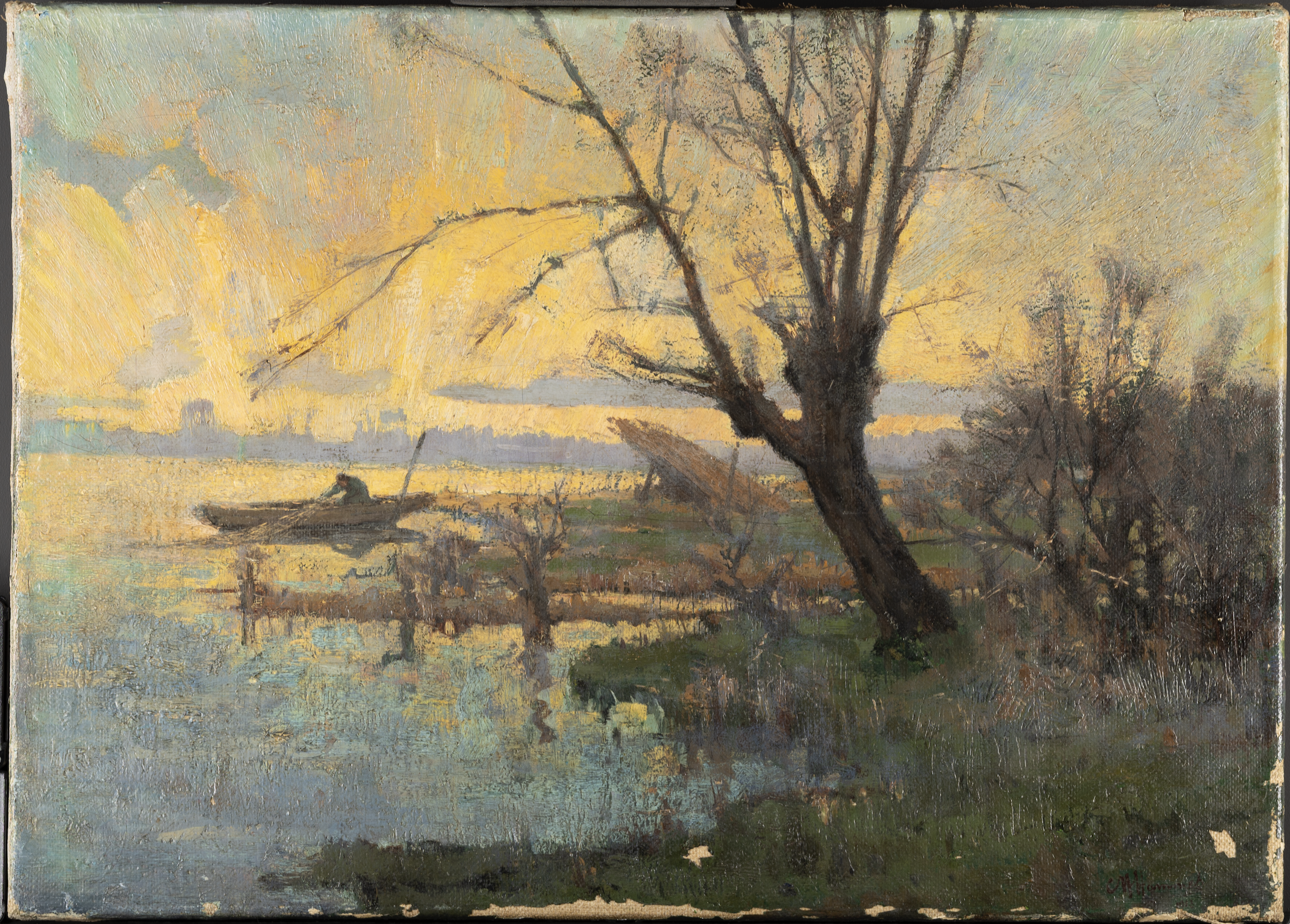
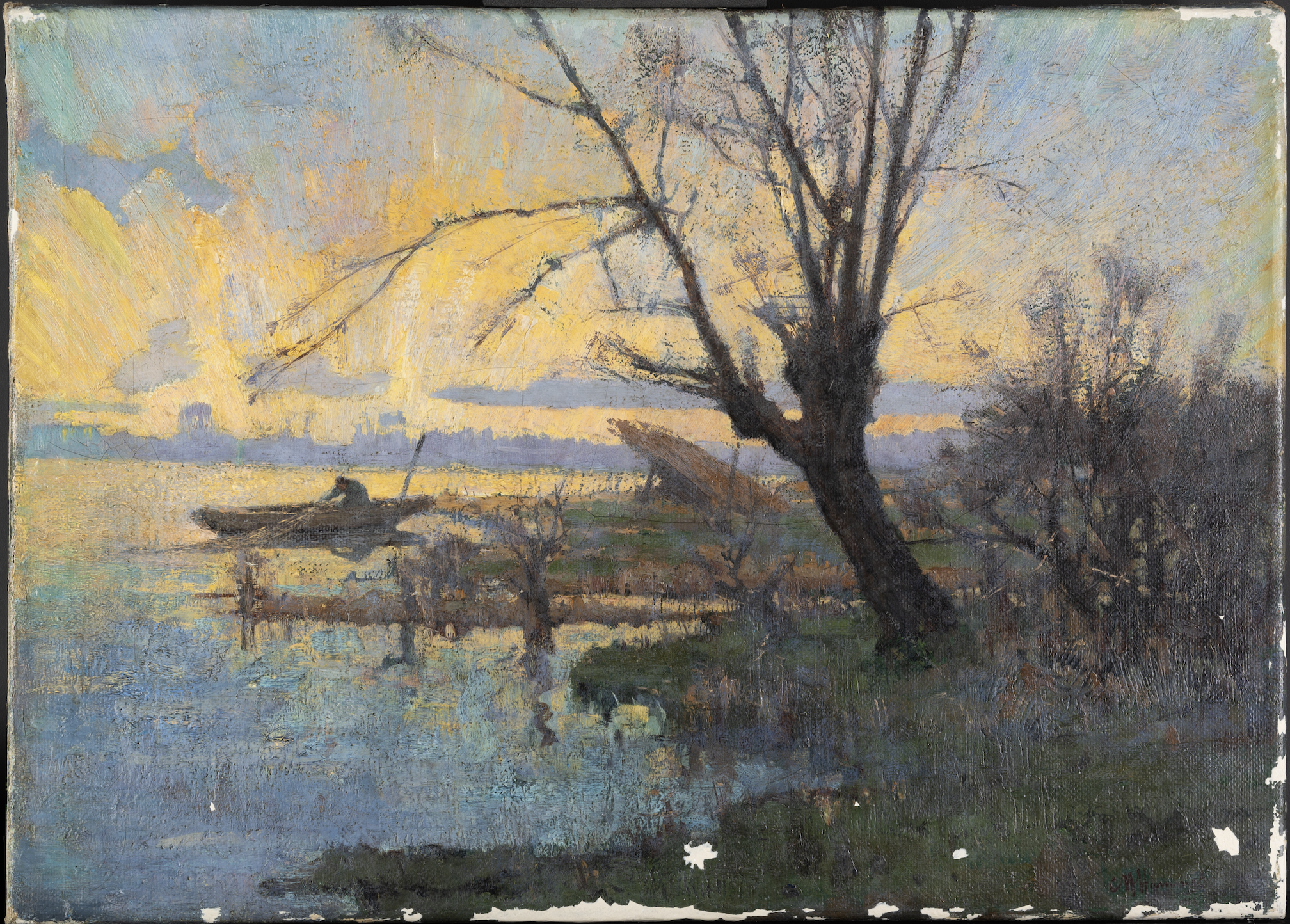
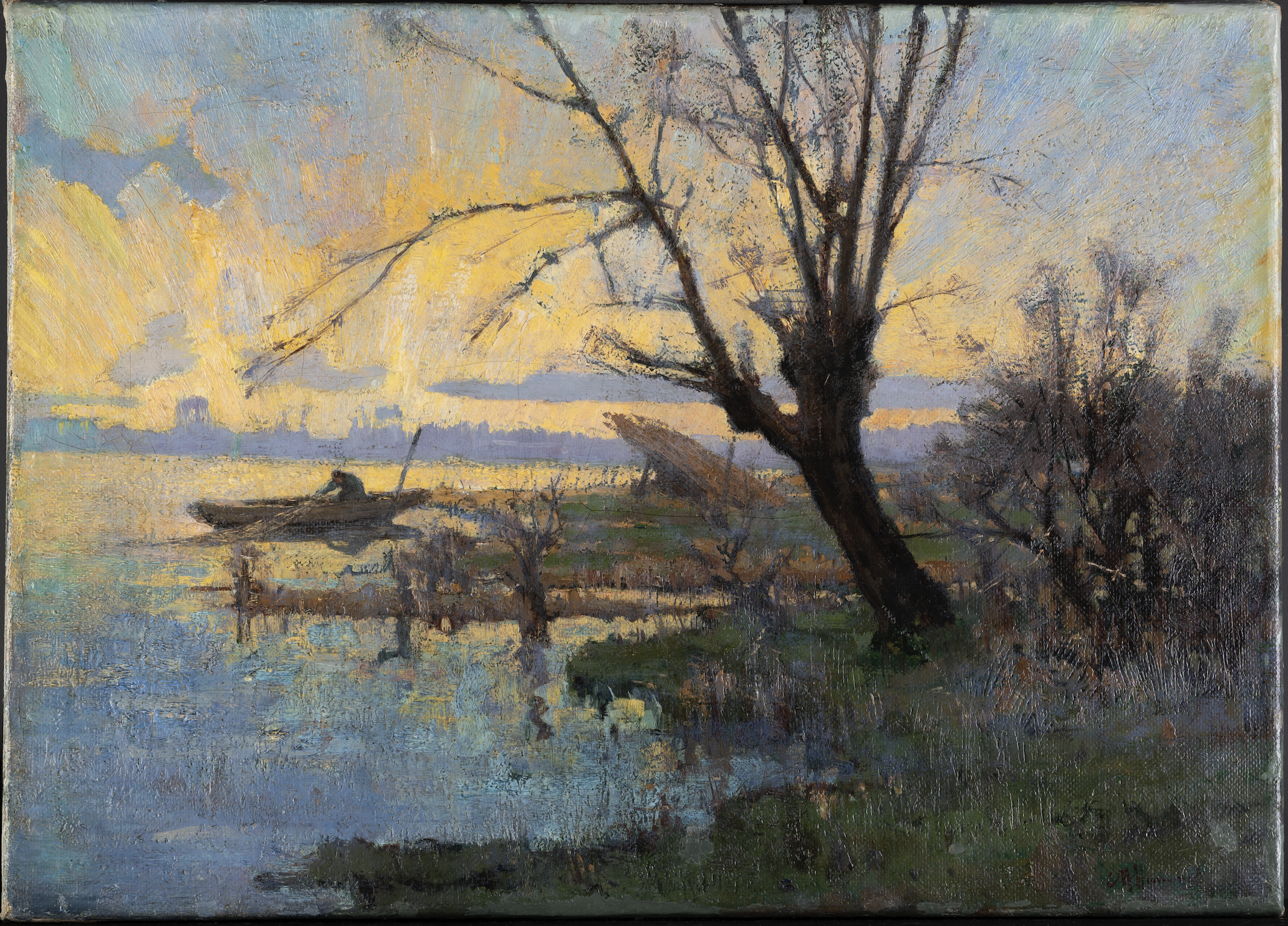
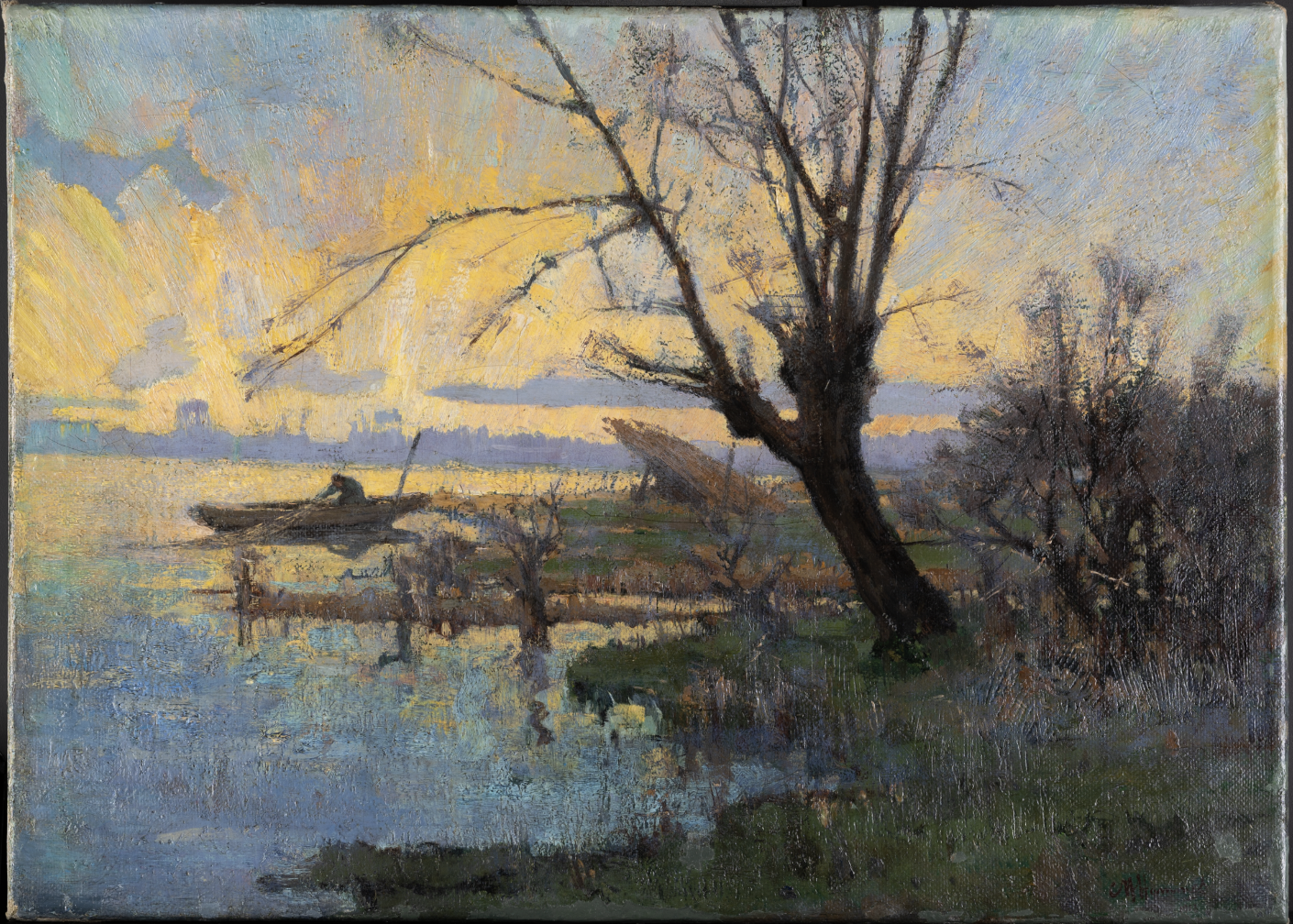
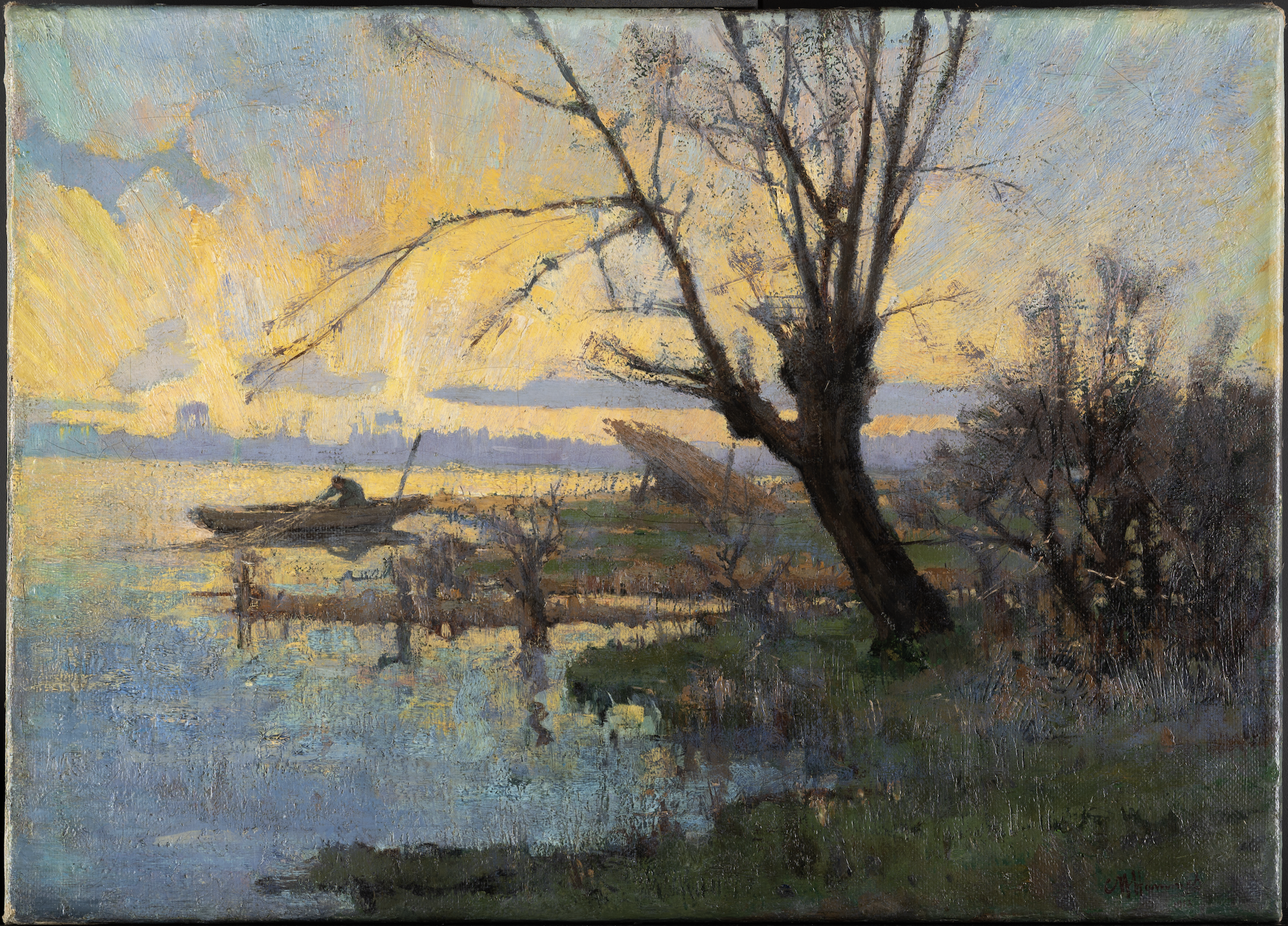
Title: Waterlandschap bij avond (Waterlandscape at evening)
Artist: Christiaan Hendrik Hammes (1872-1965)
Date: 1915
Dimensions: 47.0 x 65.0 cm
Collection: Rijksdienst voor het Cultureel Erfgoed, Amersfoort
-
Surface accretions
Yellowed and distractingly glossy varnish
Various losses
Compromised structural integrity (e.g. protruding key, frayed canvas edged, broken stretcher, deformed canvas)
-
Goal: to improve the aesthetics and the physical integrity of the painting.
Preliminary consolidation
Any loose paints need to be consolidated in preparation for subsequent handling and treatment.
Surface cleaning
The layer of foreign deposits needs to be removed to reveal the surface underneath. Cleaning can mitigate further degradations that are triggered by surface dirt and organic materials, like biological threats and moisture attraction.
Varnish removal
For a painting with a highly texturized surface (heavy impasto), the glossy varnish becomes distracting. Retaining this layer also compromises the chromatic balance since it has yellowed over time. The long-term safety of the painting can also be jeopardized since the natural-origin varnish will continue to oxidize, and its future removal will require a more aggressive removal system. So a varnish removal treatment is proposed.
Structural treatment
Structural issues like fragile edges and protruding keys need attention to restore the painting’s structural integrity.
Consolidation
Varnish removal can reveal more loose paints that need to be consolidated.
Fills
The painting shows quite a few losses that need to be filled. This will achieve a leveled surface regarding the entire paint surface.
Revarnish
Adding a layer of stable and synthetic varnish will ensure more saturated colours, even gloss, and surface protection.
Reintegration
A full imitative retouching campaign is in favour of restoring the painting's visual unity. Retocuhing is executed in phases, sandwiched between a layer of varnish.
Treatment
-
![]()
Initial state
The painting was in fair condition, though significant conservation efforts were essential to maintain its historical and aesthetic value. The primary challenge involved a compromised surface, obscured by deposits, and an uneven, yellowed varnish layer that jeopardized the work's integrity. Structurally, the canvas was frayed at the edges, and the paint layers on the tacking margins were particularly loose and unstable. Most damage consisted of complete losses, with the bare canvas exposed, primarily concentrated around the border region. Additionally, non-original keys secured with stapled fishing lines had caused a protruding key in the upper left corner, creating a risk of tension buildup and further mechanical damage.
-
![]()
Surface cleaning
The Challenge
The painted surface and tacking margins were obscured by substantial dirt accumulation that required removal without endangering the sensitive paint layers. Initial dry-cleaning efforts were insufficient to fully clean the surface, necessitating a transition to aqueous methods. The objective was to design a cleaning system that could effectively remove tenacious soiling while limiting moisture penetration into the support.
The Decision-Making Process
Preliminary Dry-Cleaning: Overall cleaning was performed using soft brushes and a museum vacuum, followed by treatment with vulcanized rubber, blotting paper, and cosmetic sponges on the stretcher, canvas, and painted surface.
Aqueous Formulation: Due to the limitations of dry methods, a pH 6.5 citric acid solution was formulated. This was utilized both as a free solvent and within a methyl cellulose-based gel to increase surface dwell-time.
Moisture Control and Clearance: To safeguard the painting, Evolon® CR tissues were used for their high absorbency to limit penetration by the aqueous system. The cleaning solution was rinsed with demineralized water, followed immediately by dabbing with Evolon® CR to ensure thorough removal of gel residues.
-
![]()
Varnish removal
The Challenge
The varnish presented a long-term risk and created a distractingly high gloss level and yellowed appearance that required removal. The primary technical obstacle was the heightened solvent sensitivity of darker-coloured paints, such as the grass and trees, which exhibited signs of solubilization and blanching during preliminary tests. Furthermore, a "blue haze" wash across the painting interfered with UV-induced fluorescence, making it difficult to rely on standard visual indicators for varnish clearance. The highly texturized surface further complicated the cleaning process.
The Decision-Making Process
Solubility Testing: Preliminary tests identified ethyl acetate as the most effective solvent for the varnish, though its high polarity necessitated a systematic decrease for sensitive areas.
Tailored Treatment : Removing the varnish from this painting was a challenging process due to selective solvent sensitivity and heavy impastos. Aiming to find a fine balance between thoroughness and efficiency amidst the challenges, a total of six different approaches to target each area and concern were adopted. See below for a detailed description.
Evaluation Criteria: Because fluorescence was unreliable due to the "blue haze," successful varnish removal was determined by achieving an even gloss and monitoring subtle colour changes across the treated sections.
-
![]()
Structural stabalization
The Challenge
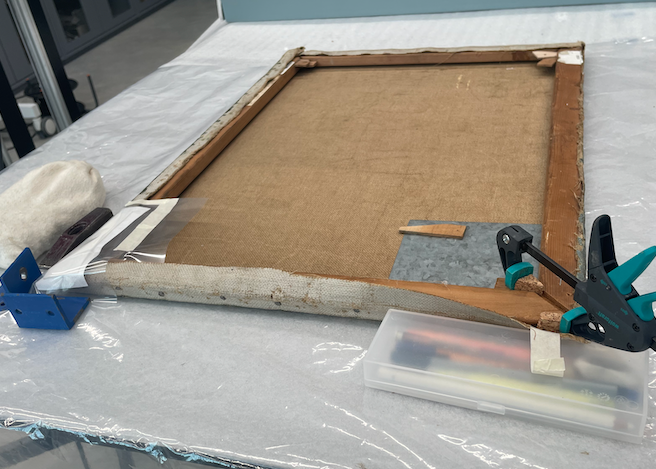
The structural integrity of the textile support and its wooden stretcher was compromised by localized deformations, biological deterioration of the wood, and mechanical instability. The objective was to stabilize these components using materials that ensured precise control, structural strength, and long-term compatibility.
The Decision-Making Process
Mechanical Remediation: A protruding key in the upper right corner was removed and shaved down to release canvas tension.
Stretcher Consolidation: To consolidate the wooden stretcher, fish glue of varying concentrations was selected for its material compatibility and structural strength.
Canvas Flattening: Deformed canvas sections were treated using a localized, "sandwich" humidity chamber. This system (blotting paper and Tyvek wrapped in Melinex) was chosen to introduce moisture as water vapour only, providing a gentle softening method that prevented liquid water from saturating the fibres.
Adhesion and Reinforcement: To secure loose canvas edges, homemade double-sided tape was employed. This was specifically formulated using Plextol B500-impregnated nonwoven polyester sheets. These materials were selected to provide a strong, flexible, and non-staining bond that was easily reversible.
Fibre Re-organization: Frayed edges were stabilized using 5% methylcellulose. This material was chosen to maintain a tidy appearance and prevent further fraying by tucking away and reattaching loose fibres beneath the canvas.
-
![]()
Fills
The Challenge
The painting presented a substantial amount of losses concentrated around the border region, extending onto the tacking margins where original paint was located. Most of these were complete losses exposing the bare canvas, along with a partial loss in the upper right corner and several on the turn-over edges where only upper paint layers were missing. The objective was to level these areas with the surrounding paint film without obscuring original material or compromising structural stability.
The Decision-Making Process
Filling Materials: A homemade BEVA 371b-based fill was selected to bridge the complete losses. The choice was motivated by the material’s high flexibility, minimal shrinkage, substantial rigidity that facilitates shaping and high conformity to the painting's edges, and convenient textuing
Application and Adhesion: The prepared filler sheets were cut to match each loss, stretched over the area, and heated with a hot spatula at approximately 80°C through baking paper to ensure a secure bond.
Texturing: To capture the specific surface structure, a silicone mould was used to take multiple imprints from the vicinity of larger paint losses. Post-filling, the texture was refined by heating through the silicone mould, with further detailing and carving performed using various dental tools.
Edge Finishing: Cleaning and smoothing of the fill edges were accomplished through reheating and the use of scalpels and small spatulas, with additional refinement using Shellsol D40 executed in a well-ventilated environment.
-
![]()
Base Retouching
The Challenge
The extensive fill and its bright colour against the original materials required a base layer of colour to reduce contrast. The primary concern was choosing a medium that remained chemically distinct from the original paint layers and the underlying fills to ensure long-term stability and reversibility.
The Decision-Making Process
Media Selection: Initial tonal integration was performed using Golden PVA Conservation Paints. This medium was chosen because it remains soluble in solvents that do not affect the original oil paint nor the BEVA fills.
Surface Preparation: The base retouching was kept slightly matte, cooler, and lighter to facilitate a smooth visual transition once the final varnish and subsequent retouching layers were applied.
-
![]()
Revarnish
The Challenge
The removal of the non-original, yellowed varnish revealed a need for a new protective coating to saturate the colours and provide a uniform gloss. The appearance of the varnish required careful selection to ensure it was sufficiently saturating to restore depth while remaining matte enough to align with Impressionist aesthetics. Excessive gloss would make the surface texture illegible, as highly reflective surfaces catch too much light and create a distracting viewing experience.
The Decision-Making Process
Material Selection: A thin, matte varnish consisting of 17.5% Regalrez 1094 and 10% Cosmoloid H80 in Shellsol D40 was applied evenly to the recto using a brush. A small amount of Tinuvin 292 was also present in the varnish to increase film stability.
Surface Aesthetic: The final finish was tailored to a lower gloss level to ensure the heavy texture of the paint remained visible and was not obscured by specular reflections.
-
![]()
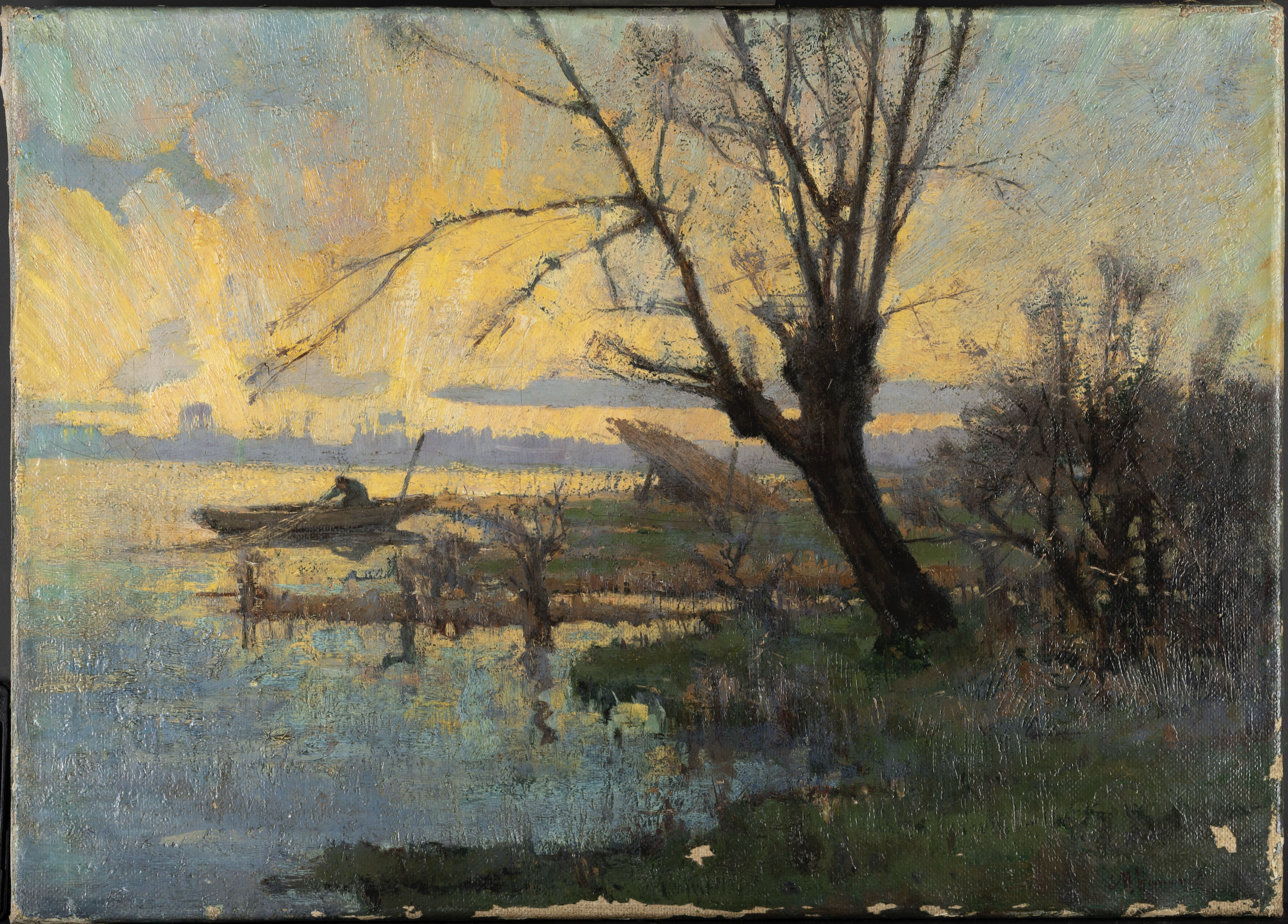
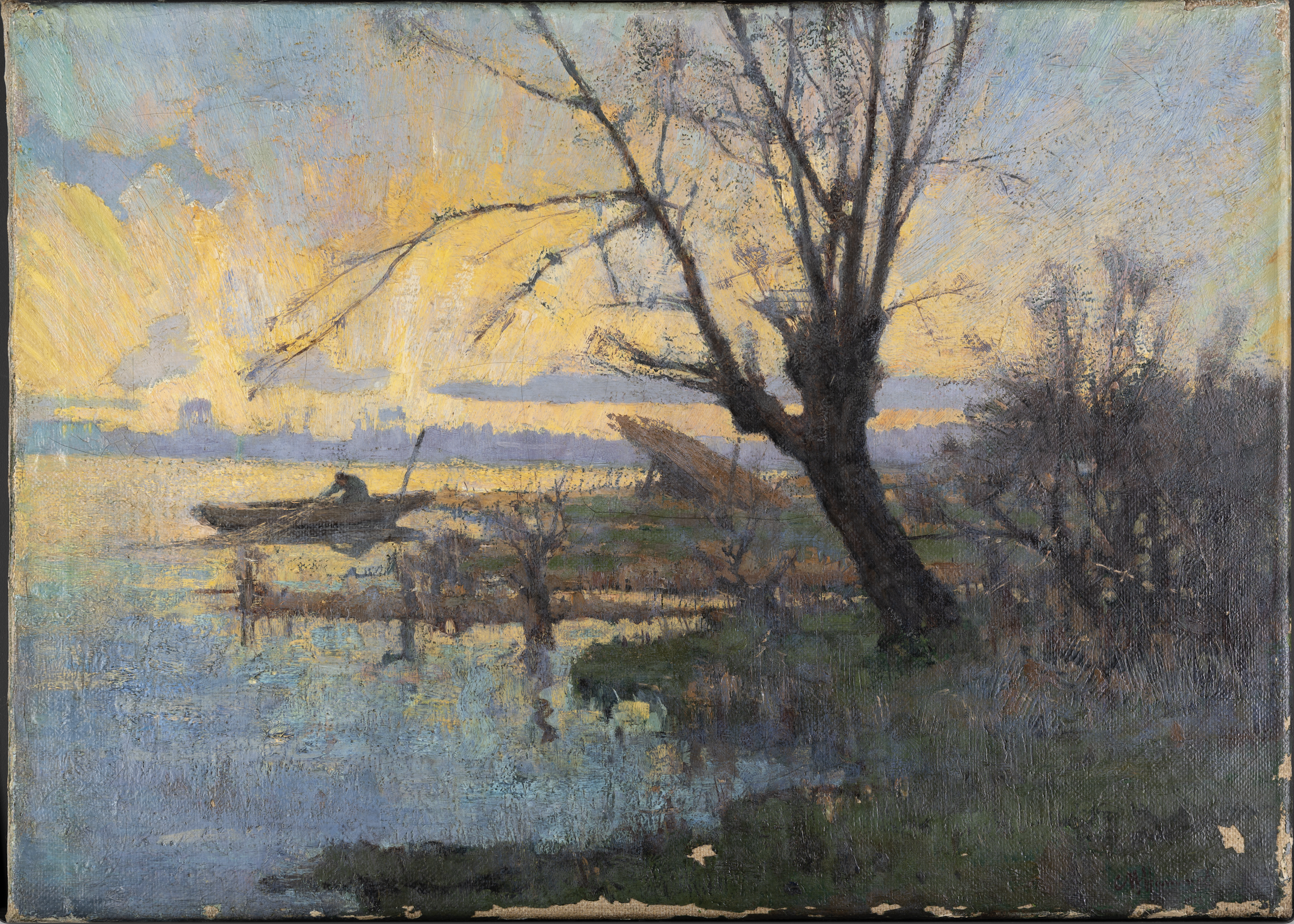
Final state
Final retouches using Gamblin Conservation Colors were added on top of the varnish to refine the visual reintegration. This sandwich technique was selected to ensure the retouching remains easily identifiable and removable without risking the original paint film.
After treatment, the painting was restored to a stable and aesthetically satisfactory condition. The work is now publicly exhibited, having addressed structural instabilities and visual disruptions caused by dirt, yellowed varnish, and deformation. To maintain the integrity of the treatment during public display, the current exhibition protocols are guided by specific preventive measures.
highlights…
Varnish removal
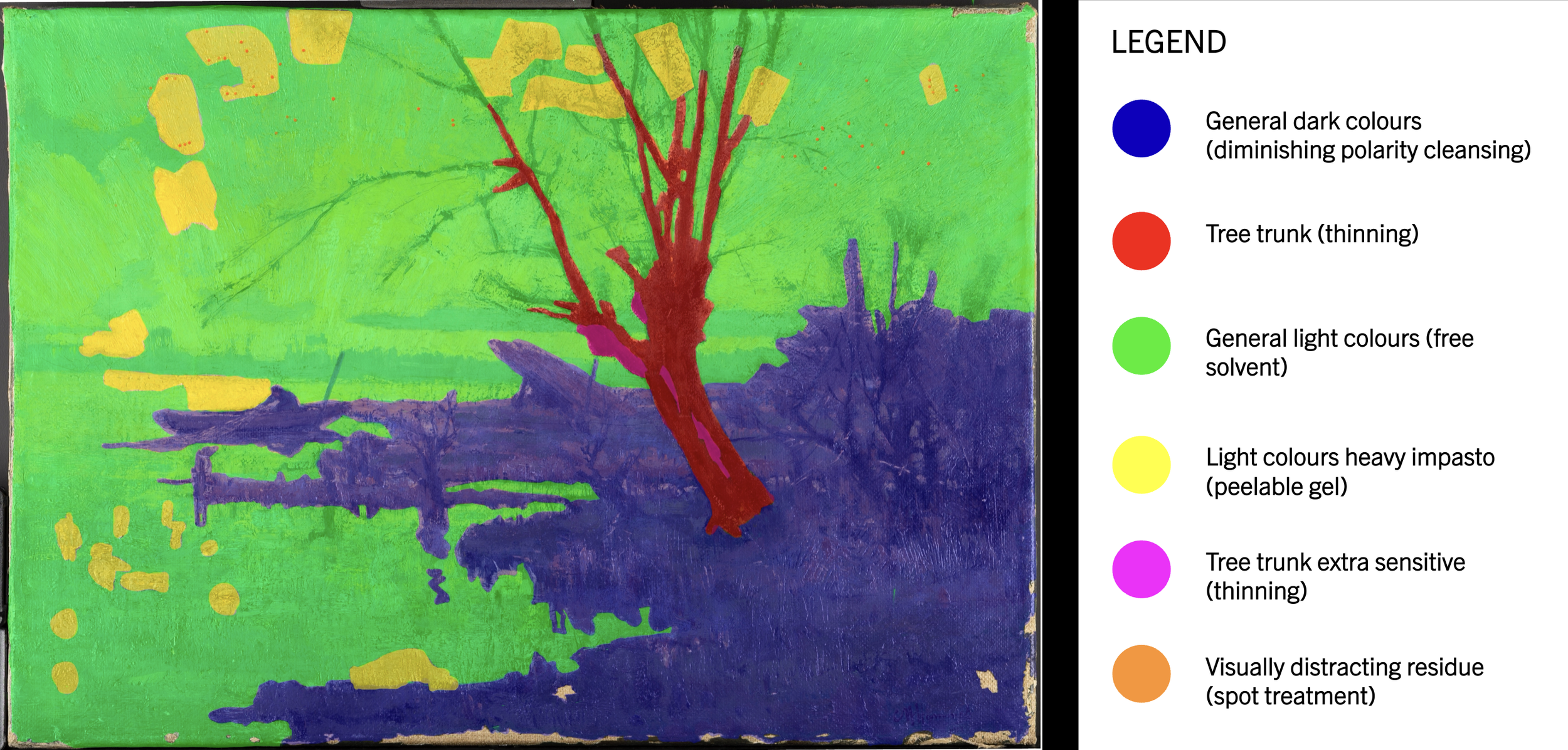
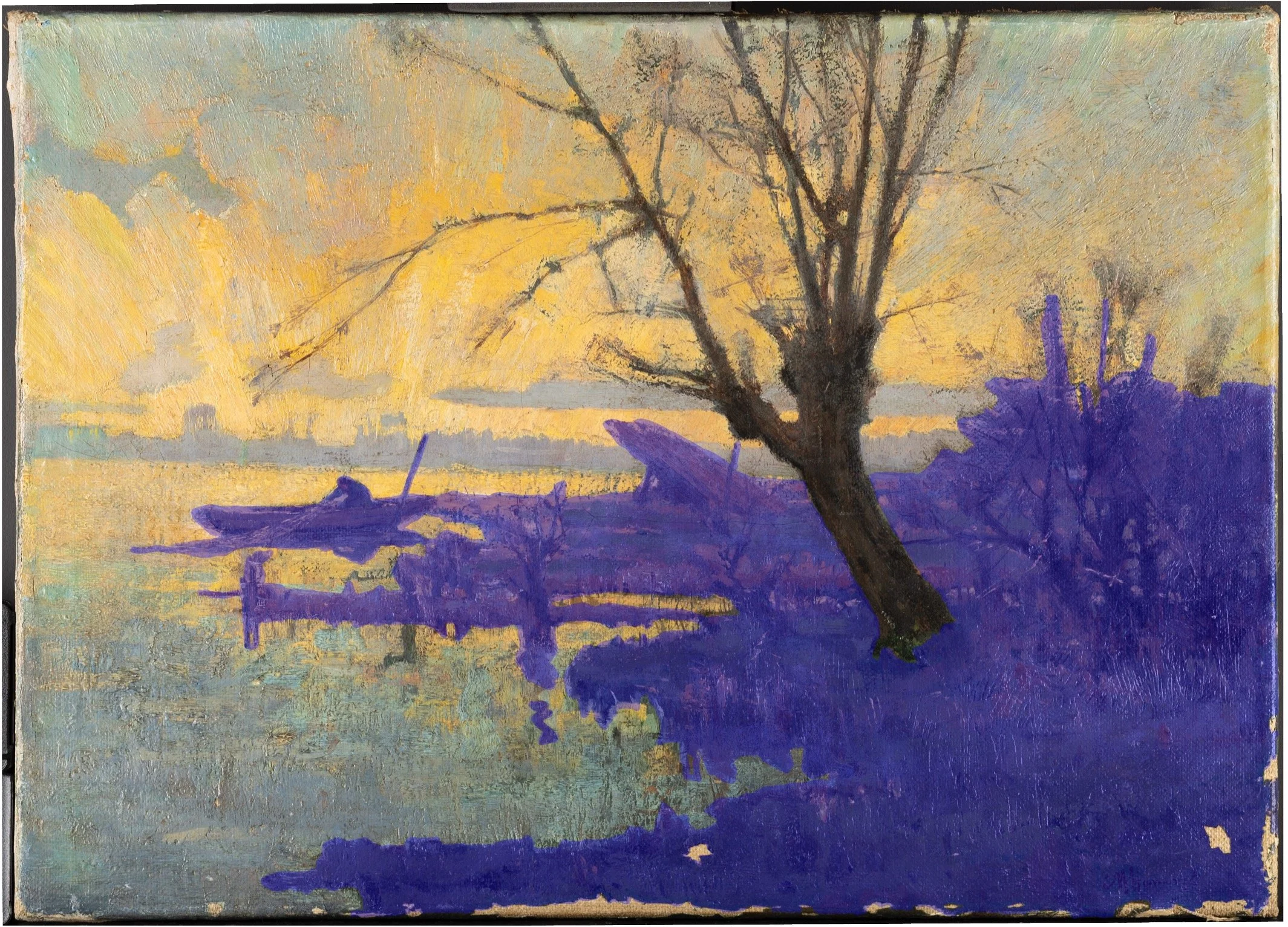
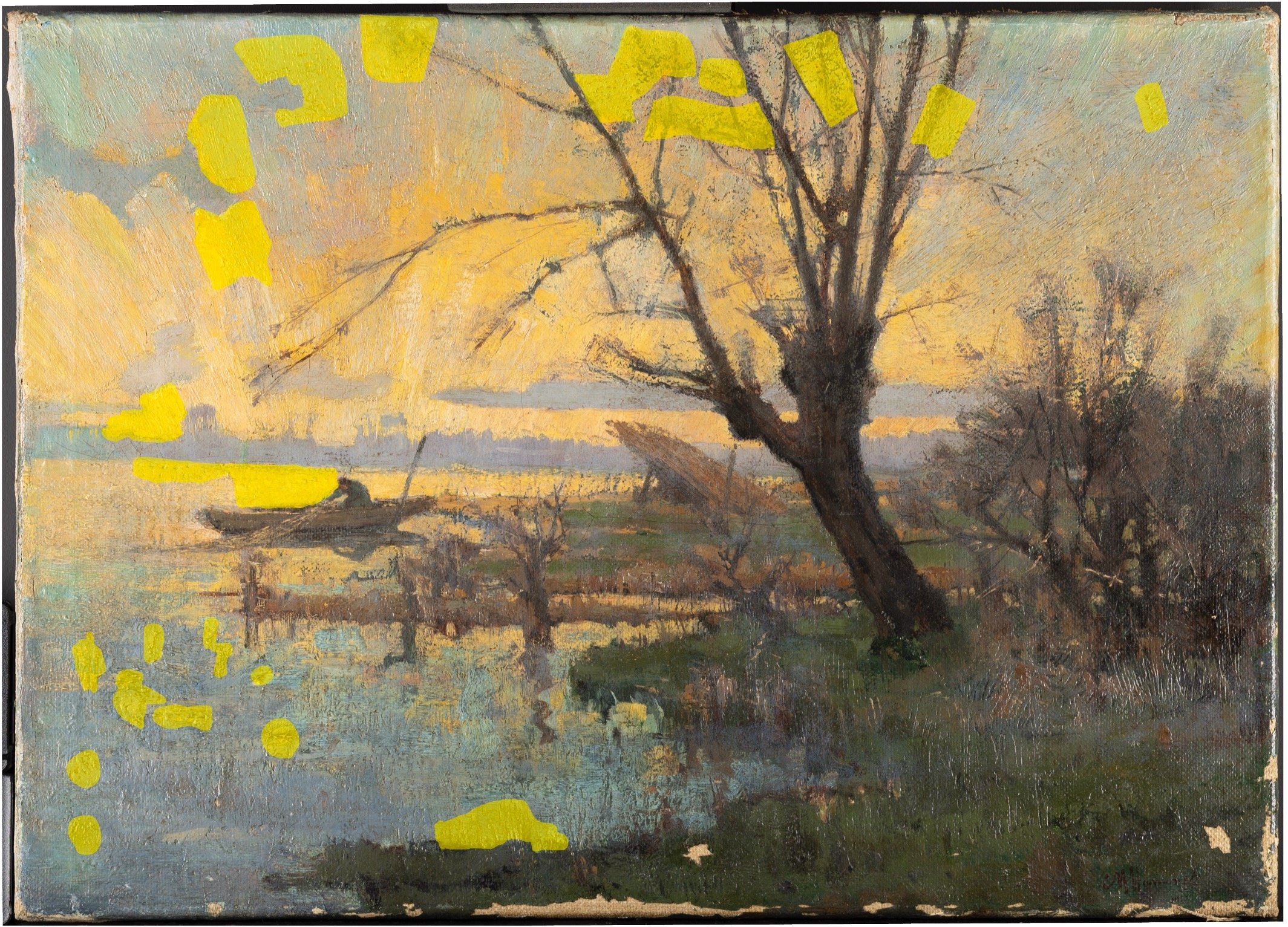
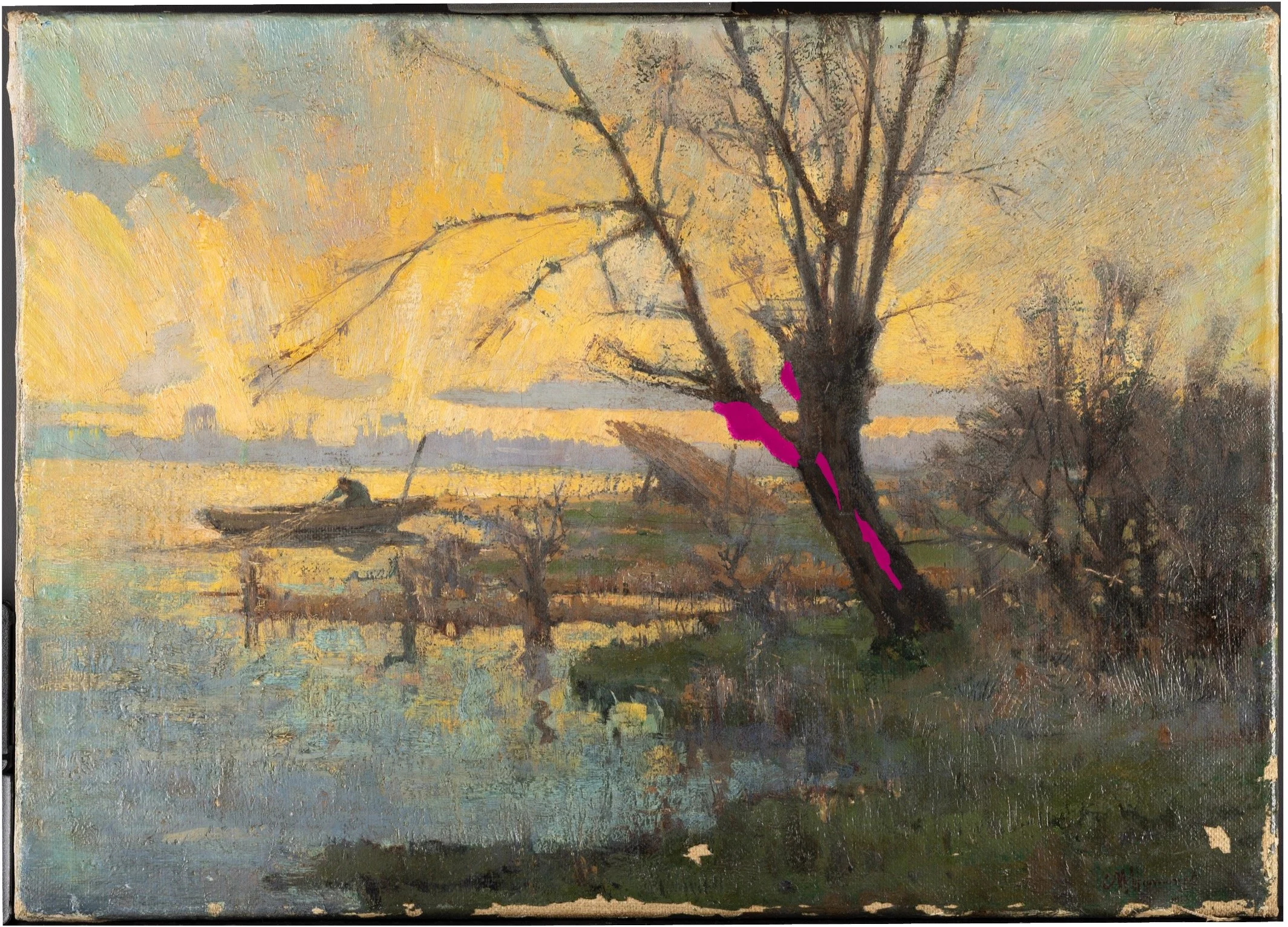
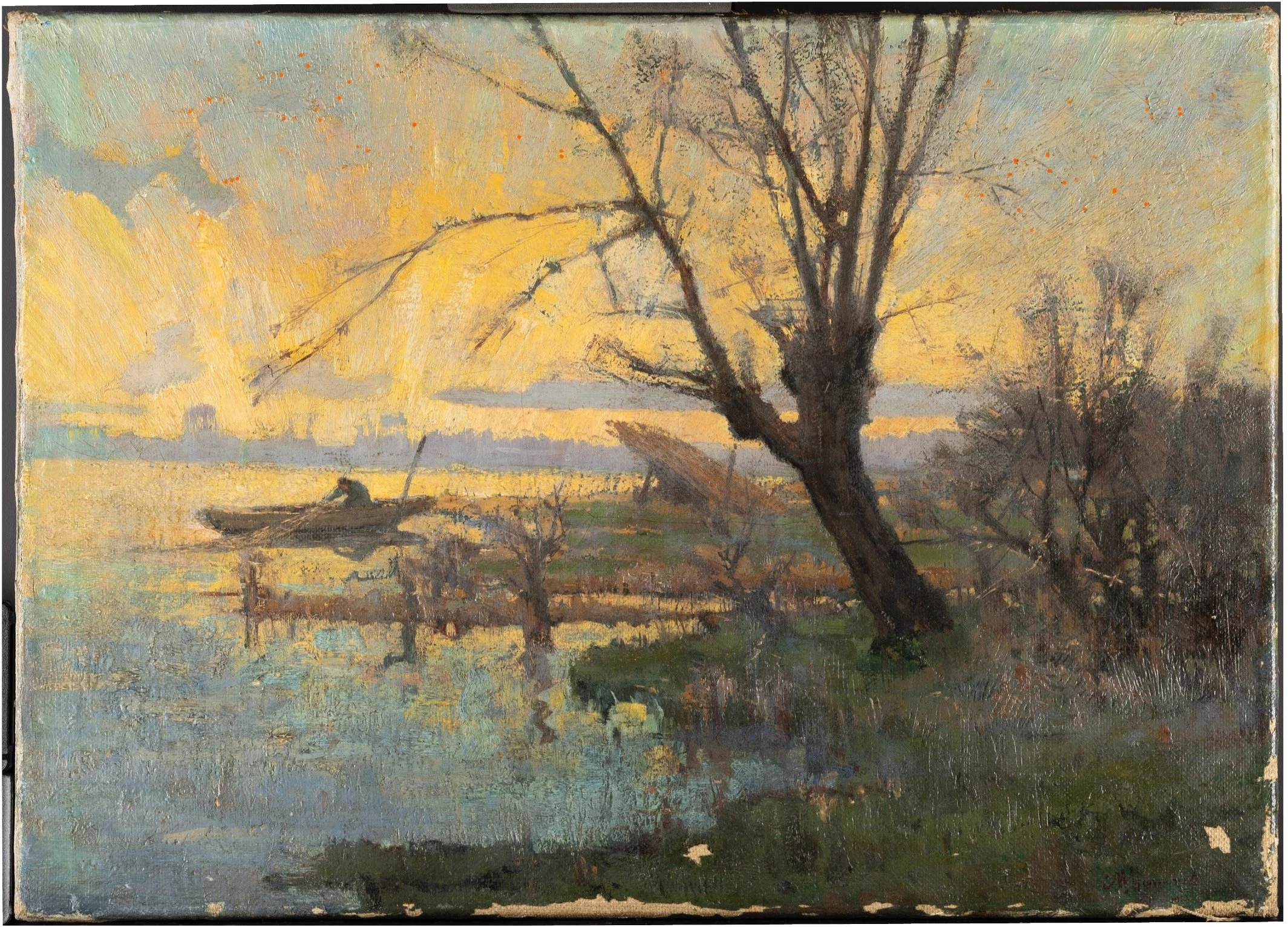
For the general dark colours, a series of ethylacetate-based solvents mixtures with diminishing polarity was systematically applied. This method allowed for targeted varnish removal without compromising the underlying paint layers. Pure ethyl acetate was first used to solubilize the varnish, followed by dabbing with Evolon® CR tissues for immediate absorption. Then, a lower polarity mixture (6:4 ethylacetate: isooctane) was used to collect the remaining varnish, and then a 4:6 ethylacetate: isooctane for the final residue. This method ensured an increasingly safer approach to the paint film. Successful varnish removal was determined by achieving an even gloss due to challenges in differentiating the "blue haze" from the varnish using fluorescence.
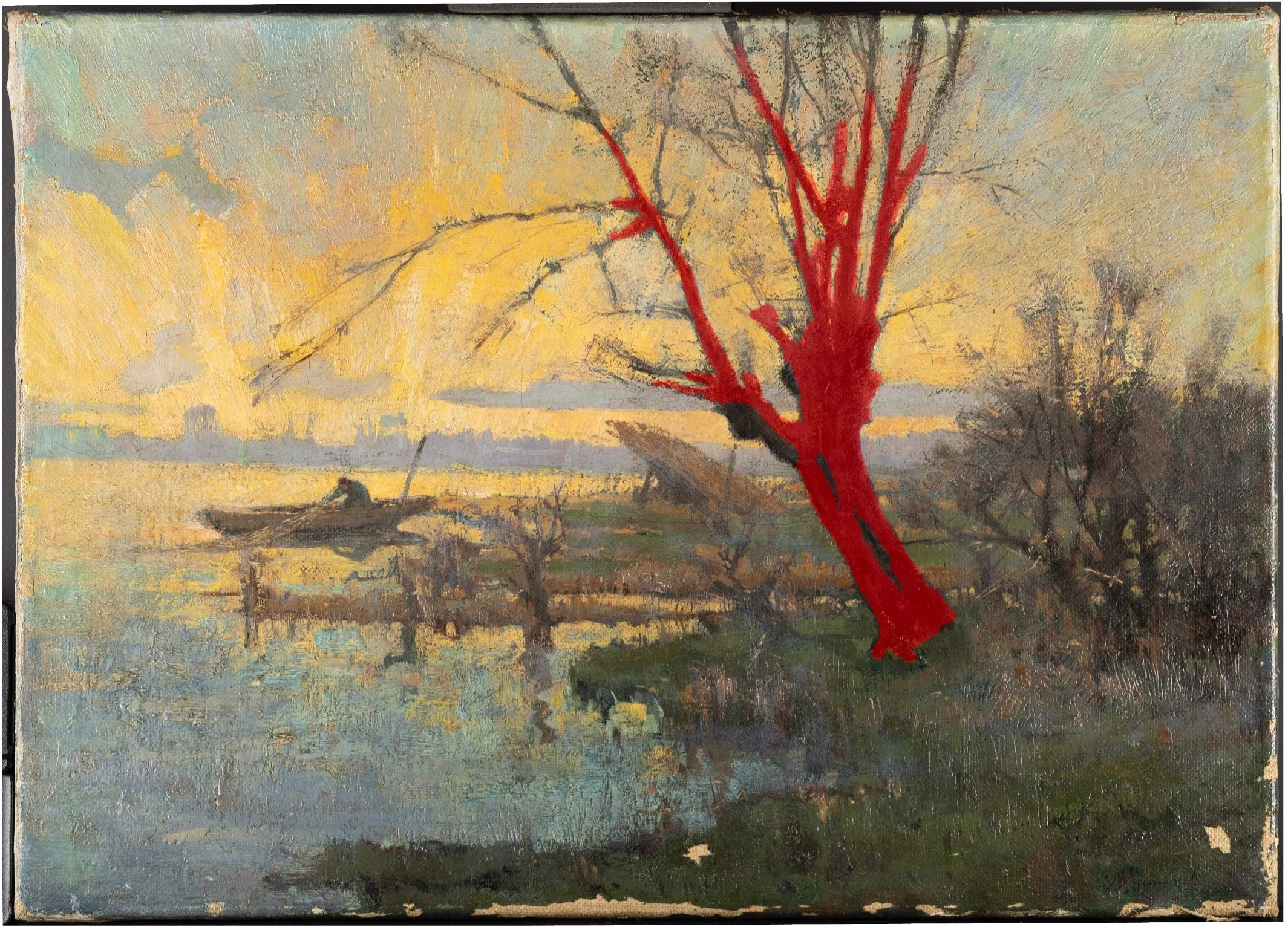
Areas displaying heightened solvent sensitivity in the dark colours, such as the tree trunk and delicate black paint lines, demanded tailored approaches involving low-polarity mixtures to ensure uniform results. The varnish in the tree trunk was thinned with 6:4 ethylacetate: isooctane. The tree branches were cleaned using the same method to ensure uniformity despite a lower sensitivity to solvents. The result was evaluated based on even gloss.
Pre-determined areas with extra sensitivity in the tree trunk were lightly thinned with 4:6 ethylacetate: isooctane as a free solvent. These areas remained slightly glossier than the neighbouring zones.
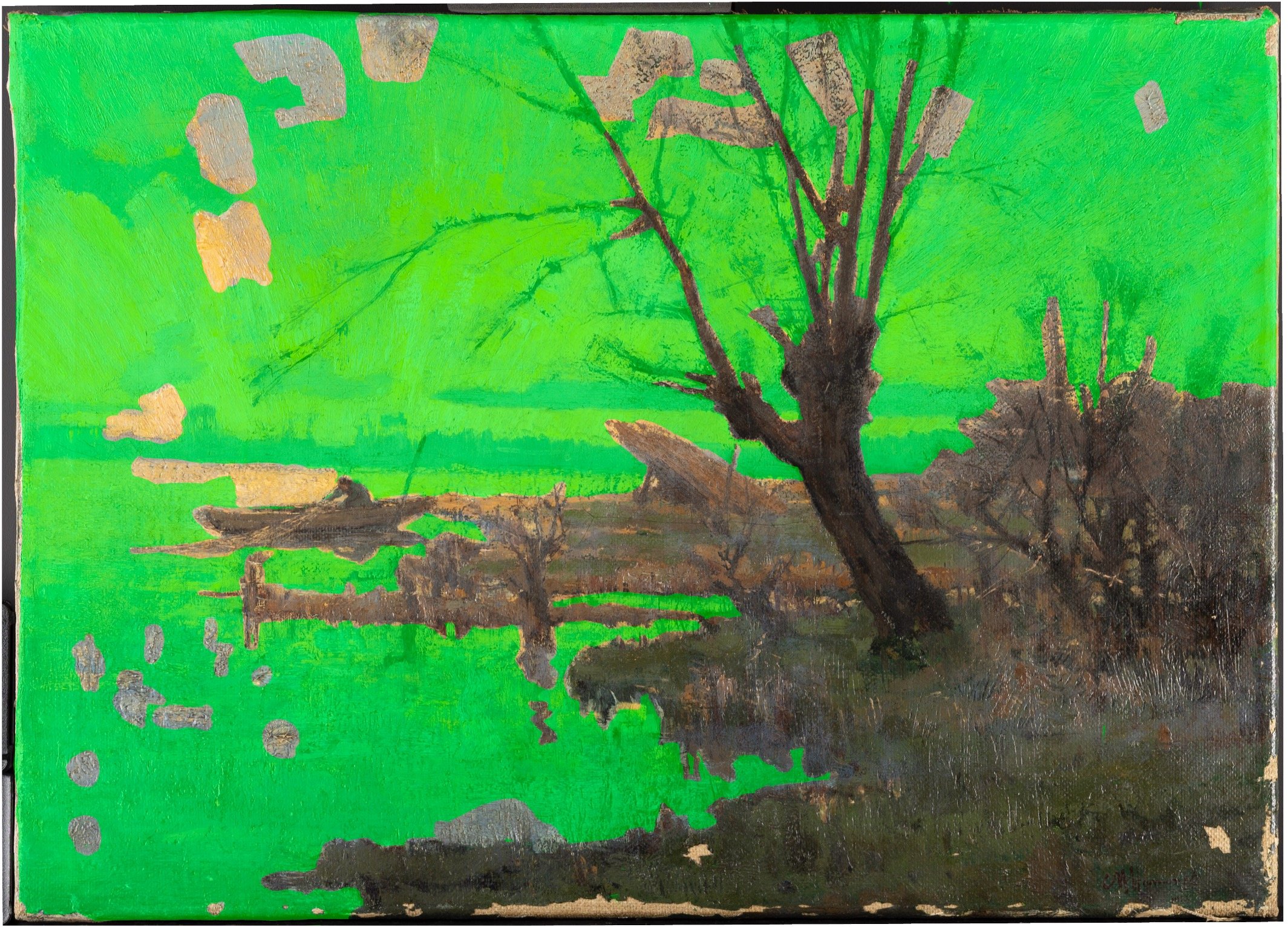
For heavy impastos, a peelable method was used, which mitigated residue and extended working time. It involved applying a viscous gel of a putty consistency, which consisted of 30% ethyl cellulose in 6:4 ethylacetate:isooctane. The putty was then pressed with Evolon® CR into the shape of the area of treatment. After leaving the gel under Melinex for 30 seconds, the solvent was allowed to evaporate and the gel to solidify for 6-8 minutes. The gel was then peeled with tweezers and then minimal rinsing with a 4:6 ethylacetate:isooctane mixture. The longer retention time is theoretically safe for the paint. The higher evaporation rate of ethyl acetate ensures that the remaining solvent is becoming increasingly concentrated in isooctane, which results in a safer treatment of the paint layer.
Gel in action…
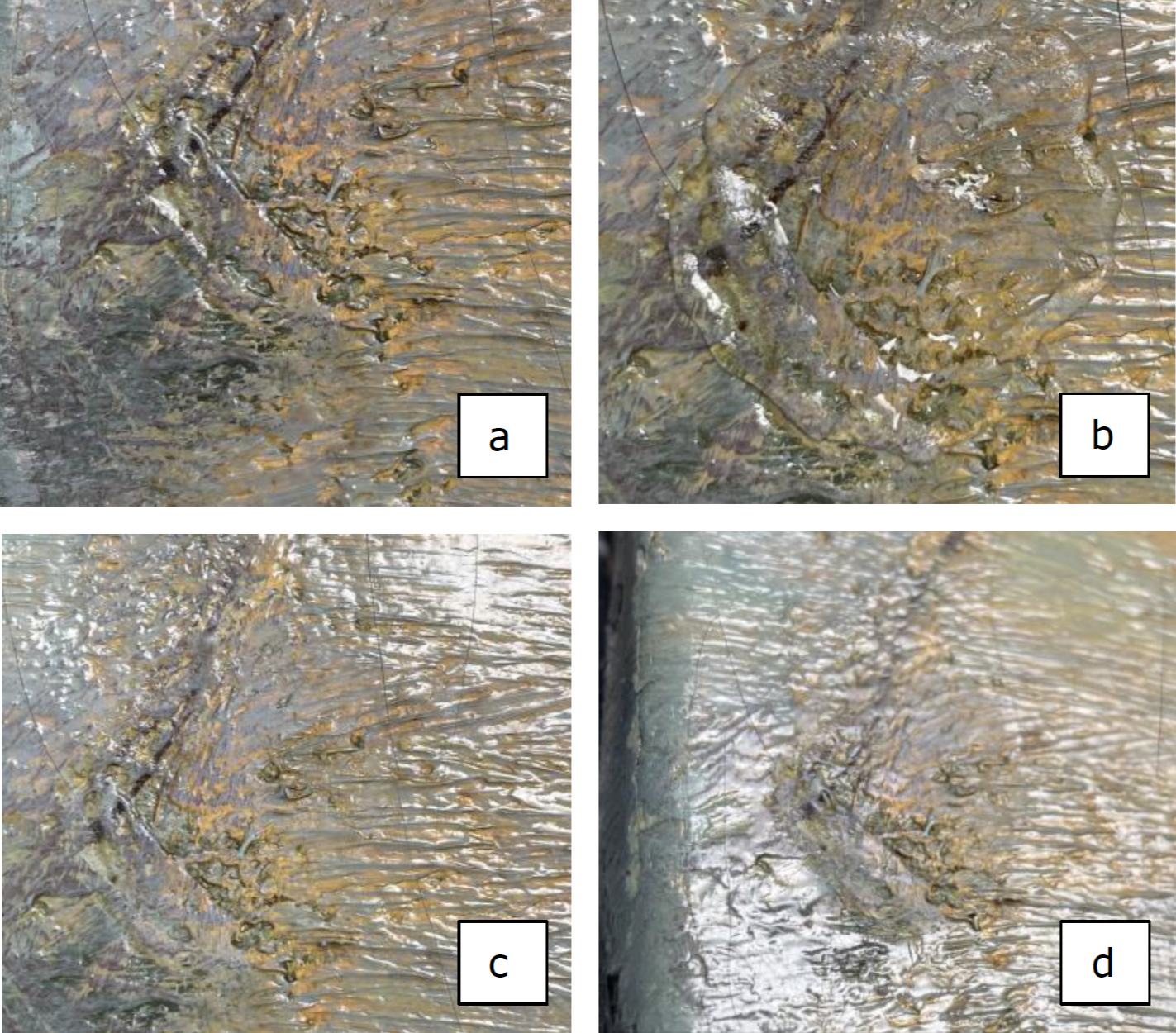
Pre-determined areas with extra sensitivity in the tree trunk were lightly thinned with 4:6 ethylacetate: isooctane as a free solvent. These areas remained slightly glossier than the neighbouring zones.
Stubborn residue present in heavy impasto areas was meticulously targeted using highly polar solvents (ethanol and acetone) and very small contton swabs to achieve final aesthetic refinement.
Applying and texturing thermoplastic fills (based on BEVA 371b and microcrystalline wax) using casted silicone moulds and heat.