Sleeping Girl
-
Object: Oil on canvas
Title: Sleeping Girl
Artist: Gustave Courbet (1819-1877)
Date: 1866
Dimensions: 50.2 × 65.5 cm
Collection: The Mesdag Collection, The Hague
-
The primary motivation for this project was a widespread, visually disruptive hazy appearance across the surface. The initial focus of the research was to identify the physical location and nature of this haze to determine a safe and effective treatment strategy. Investigation revealed that the haze originated within the varnish layers, which proved to be exceptionally problematic due to their extreme sensitivity.
The varnish was found to be a complex, multi-layered system that likely includes original or contemporary material. This system is highly reactive, exhibiting a low melting point and a heightened sensitivity to both heat and a wide range of organic solvents. Consequently, the research focus shifted toward a detailed characterization of the varnish buildup to ensure that any cleaning or removal strategies would not compromise the integrity of any original materials while restoring the legibility of the painting.
-
The research followed a progressive trajectory, utilizing a suite of analytical tools to navigate the significant material challenges of the work:
Haze visulization and characterization:
Reflectance Transformation Imaging (RTI): RTI coupled with Photoshop enabled precise visualization and correlation of the haze's distribution patterns across the surface texture, which was fundamental in diagnosing the development of the phenomenon.
HIROX microscopy: Identified the haze as a physical and optical phenomenon localized within the varnish and confirmed the presence of an original intermediate varnish situated between paint applications.
Stratigraphy and Material Analysis: Scientific investigations provided a detailed blueprint of the complex stratigraphy:
Cross-section and ATR-FTIR: Revealed the multi-layered nature of the varnish system and characterized the materials used. These analyses also identified an intermingled interface between the paint layer and the varnish system.
GC-MS: Enabled high-precision material identification of the varnish system and determined the cause of the haze to be the presence of a beeswax-containing surface coating.
-
Goal: To stabilize the varnish and restore the legibility of the painting by removing the problematic components without compromising any original materials.
The treatment is exceptionally complicated due to the highly sensitive nature of the varnish system, the presence of original varnish(es), and the intermingled nature of the paint and varnish layers. Additionally, solubility tests revealed that the entire varnish stack is soluble in the same types of solvents, making targeted removal based on differing solubility parameters unfeasible.
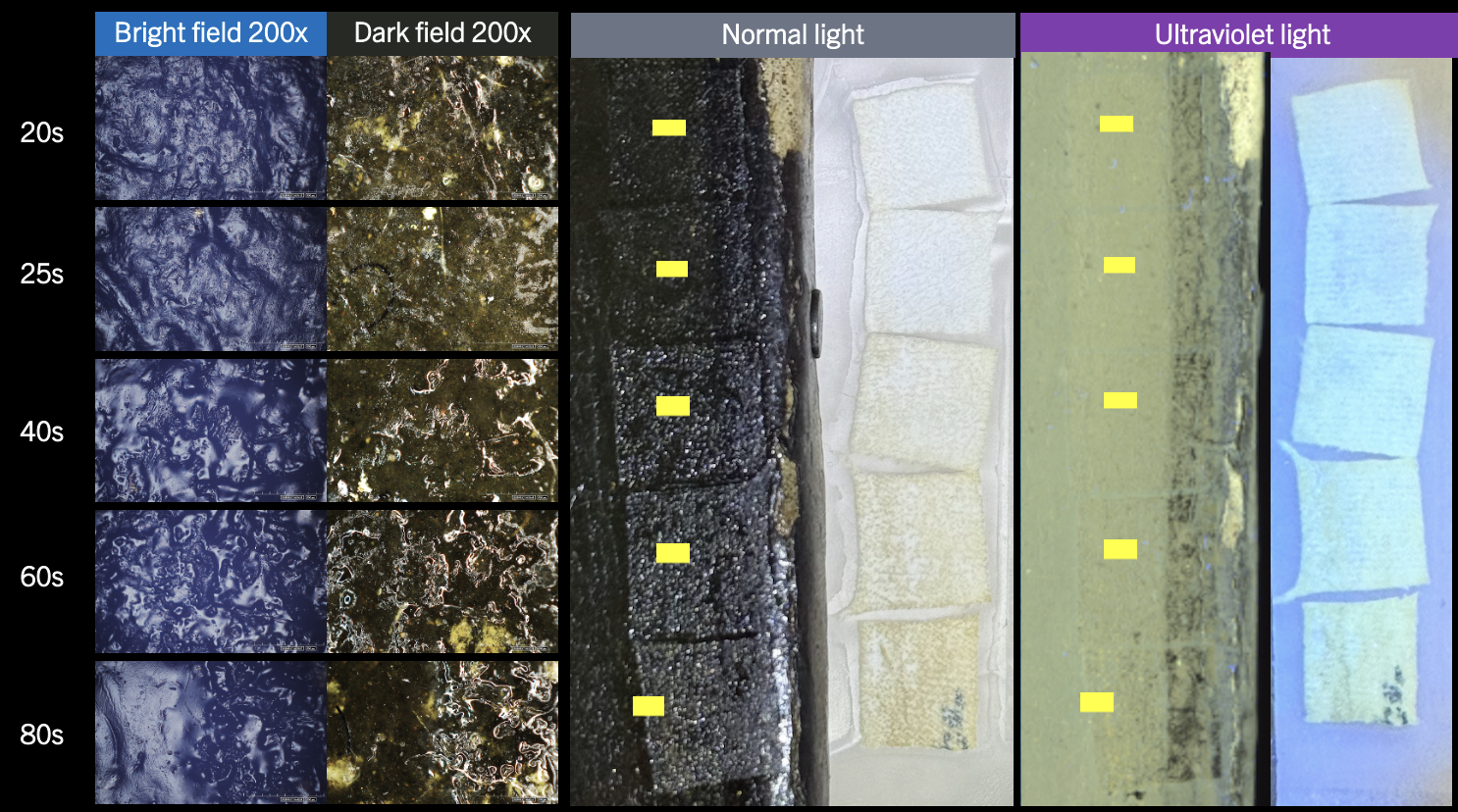
The approach then shifted to a partial varnish removal, treating the layers as a single unit. The focus was on identifying a slow-acting solvent system to enable controlled manipulation. A meticulous, multi-step, and time-sensitive method was developed. This adaptive technique used a combination of Evolon® CR tissues, small brushes, and a sequence of solvents with varying polarities, all under continuous monitoring to protect the underlying original layers.
Research
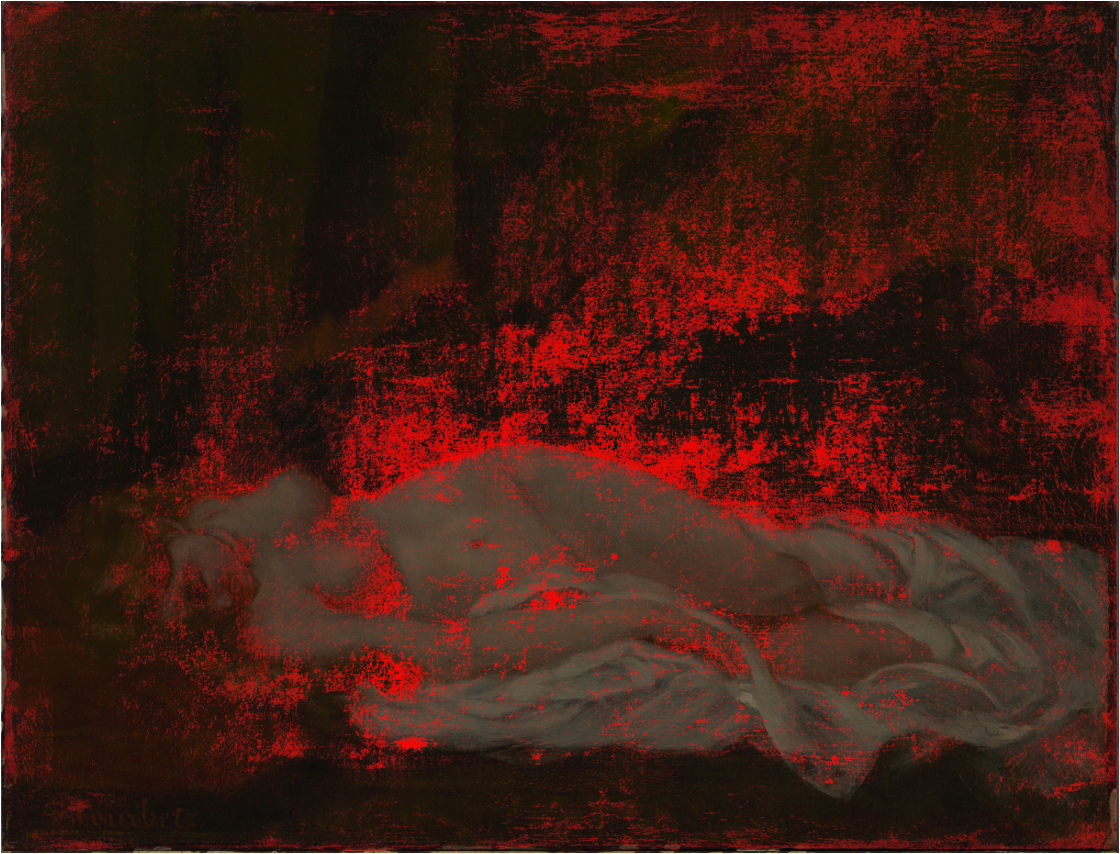
Together with the Rijksdienst voor Cultureel Erfgoed (RCE), the painting and its widespread haze formation were thoroughly researched. Investigation methods include Reflectance Transformation Imaging (RTI), multispectral imaging, cross-section analysis, Attenuated Total Reflectance Fourier-Transform Infrared spectroscopy (ATR-FTIR), and Gas Chromatography–Mass Spectrometry (GC-MS). Results suggest that the cause behind the haze is related to a beeswax-containing material that has reacted to climate fluctuations over the years, which has altered the surface structure and led to the optical perception of haze. The following picture indicates the extent of the haze.
Treatment
1
The treatment of Sleeping Girl is exceptionally complicated due to the intricate nature of the varnish system and its physical relationship with the original paint film. Specifically, the challenge lies in navigating a thick stack of varnishes that include original materials, and an intermingled varnish-paint interface. Eventually, the decision was made to only thin the varnish in a systematic way using Evolon tissues, a synthetic non-woven fabric. The following photo exemplifies the degree of control over varnish thinning by varying exposure time.